Showing posts with label architecture. Show all posts
Showing posts with label architecture. Show all posts
Monday, 21 May 2012

On the green field of the stadium.
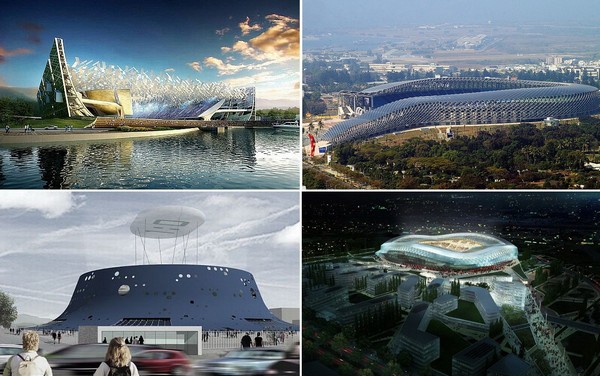
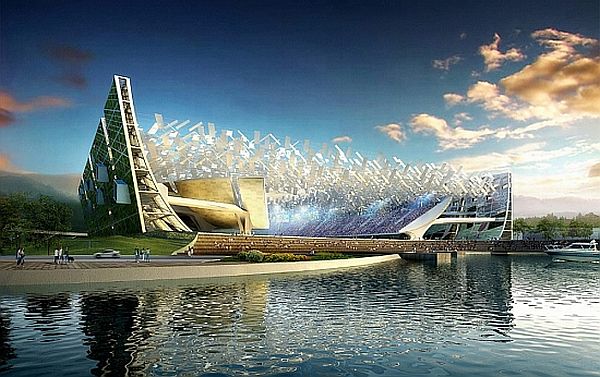
Sun Stadium in Qatar
Qatar is preparing to take vengeance World Cup to be held there in 2022, the year. Moreover, the country plans to use the stadium during the operation your most important resource (after oil, of course) - the sun. Three sports arena for the World Cup 2022 will have zero emissions of carbon dioxide, that is, all these stadiums need to be met by solar energy.
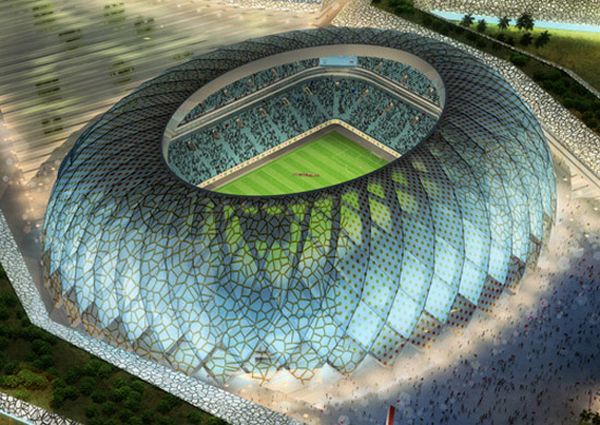
Recently, China's Tianjin Songjiang FC celebrated house warming - it moved to its own 25-titysyachny football stadium. This arena was built according to the latest "green" architecture - it collects and uses rain water has a natural ventilation system of the bowl. Part of the energy that gets through the Stadium of solar panels and wind turbines.
Eco-friendly football stadium for the Chinese Tianjin Songjiang
Garden Stadium Dalian Shide FC for
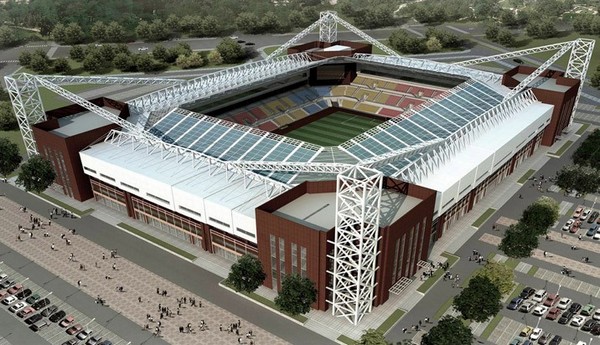
Dalian Shide FC in a few years, will move to the new stadium. The walls of this building will be ovity variety of plants that change color and texture depending on the season. No cost at this stage and without solar panels and wind turbines.
Garden Stadium Dalian Shide FC
Stadium with solar roof
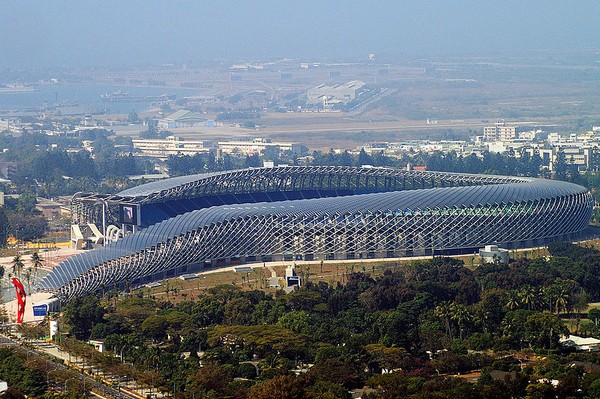
In the city of Kaohsiung in Taiwan in the 2009 World Games were held (similar to the Olympics for the non-Olympic sports). That's the sportцs forum and the stadium was built Kaohsiung National Stadium, the whole roof is covered with solar panels.
Stadium with solar roof
Sunny stadium in Bordeaux
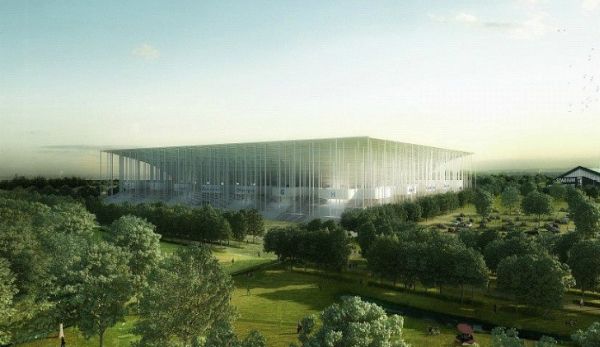
Swiss architectural firm Herzog & de Meuron has created a draft of the stadium in Bordeaux, which will become one of the stadiums hosting Euro 2016. The construction of this will look like a cloud hanging in the sky. But eating an energy given by the stadium will be solar panels installed on most of its construction and the area around the arena.
Sunny stadium in Bordeaux
Swiss architectural firm Herzog & de Meuron has created a draft of the stadium in Bordeaux, which will become one of the stadiums hosting Euro 2016. The construction of this will look like a cloud hanging in the sky. But eating an energy given by the stadium will be solar panels installed on most of its construction and the area around the arena.
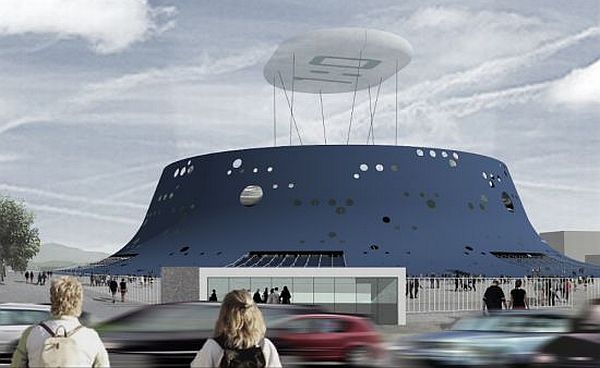
In Croatia there are no volcanoes. At least for now. But soon the country will Stadium Blue Volcano. In addition to the unusual architectural form, this arena will have a flying airship over it. It plans to install cameras and solar panels.
In India, the construction of a stadium full swing Athletic Ripple, which will be used for their needs, not only solar energy but the energy of the crowd. To do this around the stadium will be installed piezoelectric elements, transforming mechanical energy into electrical energy.
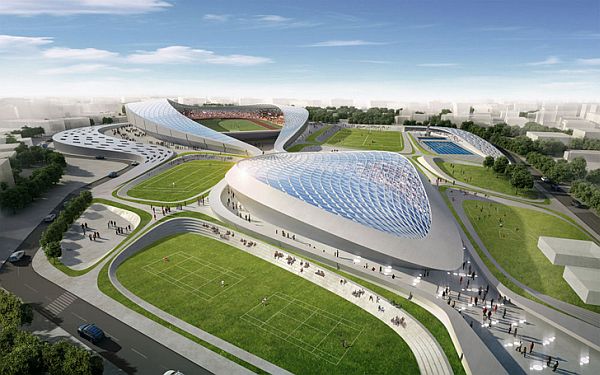
Piezoelectric stadium in India
Stadium-an oasis in Morocco
Morocco - desert country. Vegetation there is not much. Therefore, even a football stadium Grande stade de Sasablanca then constructed so as to be both a natural oasis. Within its premises is a garden, which is also a thermal buffer, creating a favorable climate and is used to cool the stadium box.
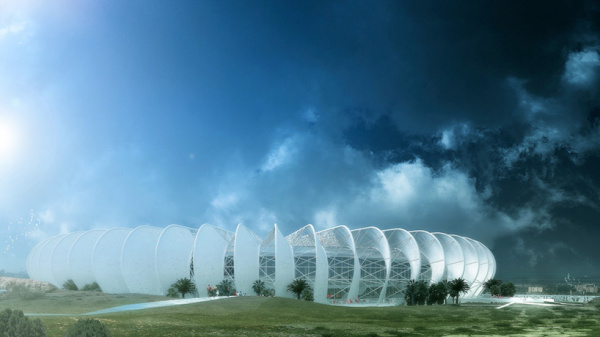
Olympic Stadium in Tokyo
When applying for hosting the Summer Olympic Games in 2016 the first year, the city of Tokyo has promised to build a new Olympic stadium. According to the authors of this project, the arena was to be created from recycled materials, and most of the electricity used here was assumed to be solar. But when choosing a host 2016 Olympics won the bid of Rio de Janeiro. So this amazing project, likely will not be realized.
When applying for hosting the Summer Olympic Games in 2016 the first year, the city of Tokyo has promised to build a new Olympic stadium. According to the authors of this project, the arena was to be created from recycled materials, and most of the electricity used here was assumed to be solar. But when choosing a host 2016 Olympics won the bid of Rio de Janeiro. So this amazing project, likely will not be realized.
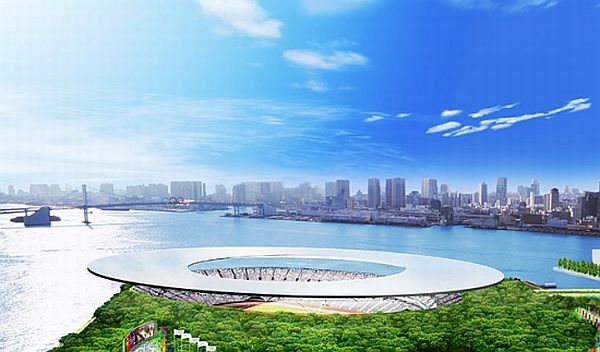
Olympic Stadium in Tokyo
Ekostadion in Nice
Another stadium for Euro 2016. At this time, in Nice. Arena Eco Stadium will become the center of the new district, Eco-Valley. The project provides for the stadium recycling of rainwater, the use of natural ventilation and lighting. A 16,000 square meters of solar panels is expected to allow this construction to produce more energy than can be spent.
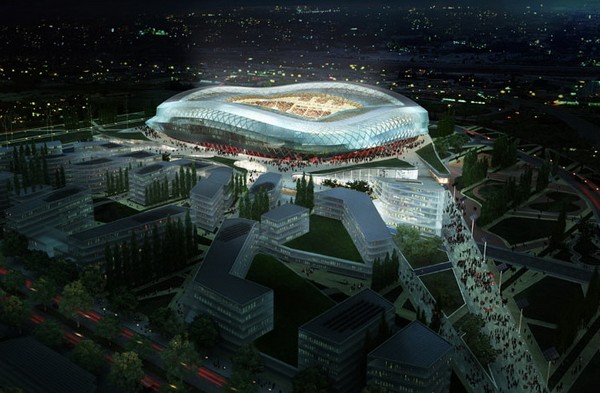
Ekostadion in Nice
The spirit of competition and national pride can be very helpful. Amazing buildings are created, made important discoveries. They help make a difference. However, it is nice that it's not one single thing that this helps.
Algae Urban Farm - a project reflective of eco-building in Iran by British Architects
For me, it is clear that the development of technology, recognizing that sustainability is important, the important role played by the environment. While I was writing my essay, I studied this question.
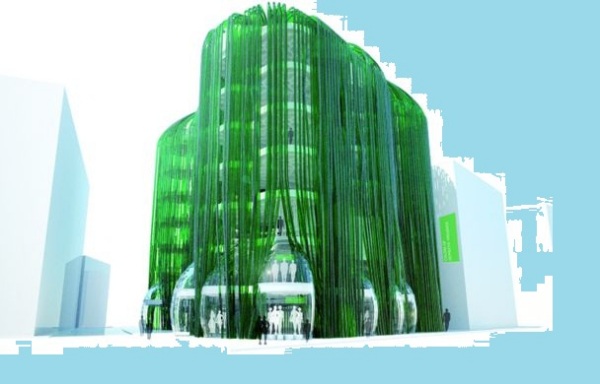
Algae Urban Farm - a project reflective of eco-building in Iran by ecoLogicStudio
Monday, 9 April 2012
Ecological Architecture: A Critical History

This is a collection of essays and case studies about sustainable architecture. The book is separated into three parts: current environmental problems and ideas for solutions; case studies, devoted architects and movements in sustainable design; third one is about futurological forecasts in further development of ecological building.
http://www.thamesandhudson.com/9780500342107.html
http://books.google.ru/books?id=91F4QgAACAAJ&dq=Ecological+Architecture+A+Critical+History&hl=ru&sa=X&ei=rbGCT-isLYqgOvjenI4H&ved=0CDEQ6AEwAA
Tuesday, 6 March 2012
Origins Architects
Origins Architects is architectural bureau based in Rotterdam, Netherlands. They position themselves as oriented on sustainable approach in architecture, with careful attitude to environmental conditions and keeping local traditions in buildings.
For solving problem of energy-efficient building OA uses a standard for contemporary green architecture set of sustainable technologies in their projects, Origins Architects cannot be named innovative in this area and their main merit is successful combination of already developed technologies and pleasant design with strong links to traditional architecture; they just create simple buildings where habitants will live with pleasure.
Obviously, this bureau gives preferences to organic renewable materials. As a reference to traditional folk architecture, designers of Origins Architects make extensive use of wood and plywood both exteriors and interiors, that is understandable - wood is renewable and local material, at the same time it creates special atmosphere of lively breathing space, it keeps a spirit of a place.

The example of their work is 'eco -villa' in Nieuwveen, Netherlands. There was a task to design a house that will be independent of the engineering communications. For this aim, a house has been equipped PV solar panels (3 on diagram below) for electricity supply. Configuration of building and its glazing allow to achieve passive solar energy (1, 4) for lighting and heating through the whole year. The shape of roof gives opportunity to gather rain water in subterranean tank (2,6,7). Also they used geothermal energy (8) for heating and cooling in different seasons of the year. As it is illustrated with diagram from OA website, warm is collected and then spreaded by heat pump (9).

Are these applied techniques appropriate for South Holland conditions? This region has rather soft climate with average minimum temperature near +2° in winter season and maximum temperature +24° in summer period; average annual precipitation is near 650 mm. So, these conditions are favourable for collecting rain water for household necessities and combined usage passive solar energy and geothermal energy for heating effectively. Glazing surfaces of this house are oriented to the Sun's motion - they are placed on east, south, west facades of the building. It seems to me that there is a risk of overheating of the house in summer period. At the same time, cooling is organized with using geothermal energy; in principle, it should be sufficiently for creating comfortable conditions. It is not very clear about photovoltaic electricity supply and its effectiveness for this region. Netherlands has average annual level of solar irradiation near 1000 kWh/ m2, particular in region of South Holland this number is 825-1100 kWh/ m2. Ideally, it gives opportunity to get energy enough for needs of a small house, if solar panels have square more than 5 m2. At the same time, their placing only on the surface of the roof complicates collecting of solar energy in winter period - it would be more suitable to set up additional solar panels vertically.
Monday, 17 October 2011
Act Right about Wood

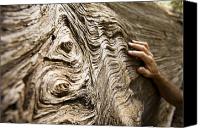

Look at the origin of a piece of timber or paper when you buy it.

FSC - Forest Stewardtship Council
NWFA - National Wood Flooring Association
AWI - Architectural Woodwork Institute
WFCA - World Floor Covering Association
IWPA - International Wood Product Association
Written by Anastasia Osminina
Level 5 BHSAD
Subscribe to:
Posts (Atom)